

Aletsch Glacier, Switzerland – Exploring the Largest Glacier in the Alps

Tour Name: Aletsch Glacier Walk – Exploring the Largest Glacier in the Alps
Official Website: https://www.aletscharena.ch

Short Description: Discover the spectacular Great Aletsch Glacier (Grosser Aletschgletscher), a UNESCO World Heritage landscape in the Swiss Alps. Enjoy panoramic viewpoints, beautiful Alpine hiking trails, and guided excursions onto the glacier itself.

Tour Summary: The Aletsch Arena offers an extraordinary combination of mountain scenery, glacier exploration, panoramic hiking, and traditional Swiss Alpine villages. Visitors can admire the glacier from accessible viewpoints or join a qualified mountain guide for a more adventurous experience on the ice.
Location: Aletsch Arena, Canton of Valais, Switzerland. Main access points include Fiesch, Fiescheralp, Bettmeralp, Riederalp, and Belalp.
How to get there: From Zurich and abroad
From Zurich: Take the train from Zürich HB towards Brig, usually via Bern or Visp, depending on the connection. From Brig, continue by Matterhorn Gotthard Bahn towards Fiesch or Mörel, depending on your chosen starting point.
By car from Zurich: Travel via Lucerne or Bern, depending on the route, towards Brig and the Upper Valais. Continue to the relevant valley station or village parking area. Many mountain destinations are reached by cable car.
From Geneva: Travel by train via Lausanne and Visp towards Brig and Fiesch.
From abroad: International travellers can connect through Geneva, Zurich, or Basel. The Swiss rail network provides onward connections to Brig and the Aletsch Arena.
By air: Zurich and Geneva airports are practical entry points. Allow additional travel time for the mountain railway and cable-car connections.
Check the SBB.ch timetable and cable-car operating schedules before travelling.
Important: Check our 4BTravelGuide's detailed picture albums and comments below:
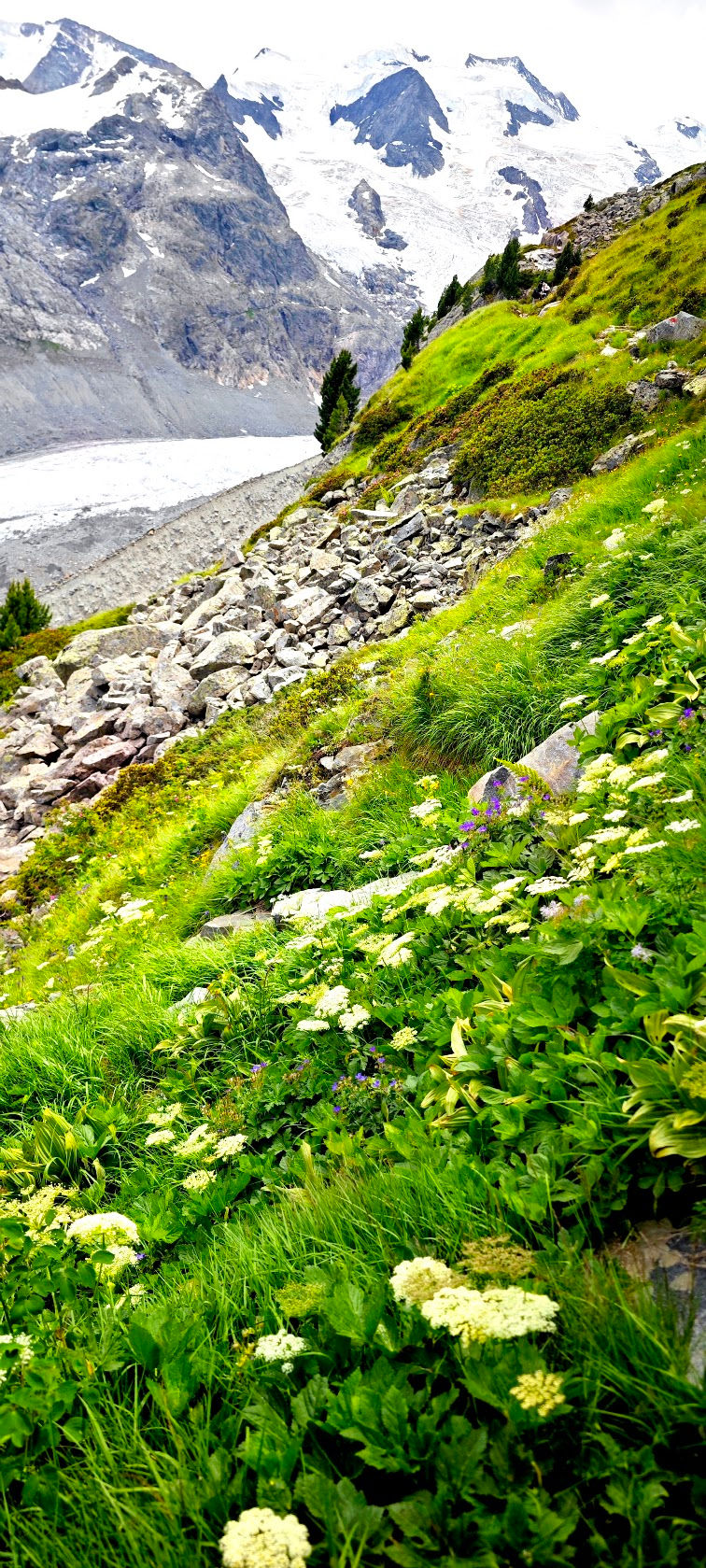
Aletsch Glacier Arena, Switzerland - Exploring the Largest Glacier in the Alps https://photos.app.goo.gl/cX6riGEgMUvKAcL6A Walking the Great Aletsch Glacier — Aletsch Arena, Valais, Switzerland
Sample Travel Itinerary in Short Form:
Day 1: Arrival in Fiesch or Bettmeralp, cable car to a panoramic viewpoint, and an easy Alpine walk.
Day 2: Hike towards Märjelensee or join a guided glacier excursion. Enjoy the surrounding mountains and glacier landscape.
Day 3: Explore Riederalp, the Aletsch Forest, or another panoramic hiking route before returning home.
Total Walking Distance at this location: Highly variable. Easy viewpoint walks can take 1–3 hours, while longer routes around Märjelensee and the high-altitude trails can take several hours. Guided glacier tours typically involve approximately 6 hours of walking, including 2–3 hours on the glacier, depending on the tour.
Interests: Glaciers, hiking, nature, photography, geology, UNESCO World Heritage, Alpine villages, adventure, family travel, and landscape exploration.
Tour Type: Nature and outdoor adventure, hiking, glacier discovery, scenic mountain excursion.
Recommended Stay Duration: 2–3 days for a good introduction; 4–5 days for hiking, photography, and guided glacier activities.
Physical Effort: Easy to demanding, depending on the route. Glacier excursions require sure-footedness and suitable physical condition.
Adventure Type: Alpine exploration, panoramic hiking, glacier trekking, photography, and nature discovery.
Language Spoken: German, Swiss German, French, English, and other languages depending on the guide and service provider.
Risks: Changing mountain weather, snow and ice, steep terrain, falling rocks, glacier crevasses, slippery paths, altitude-related discomfort, and cable-car or trail closures. Glacier travel must be undertaken with an appropriate qualified mountain guide.
Best Time to Visit: Late spring through early autumn, with July to September generally offering favourable conditions for many hiking and glacier activities. Exact availability depends on weather, snow, and local operating schedules.
Weather Considerations: Mountain weather can change rapidly. Check forecasts, trail conditions, and cable-car schedules. Bring layers, rain protection, sun protection, and sturdy hiking footwear.
Photography Tip
Bring both a wide-angle and telephoto lens if possible.
A wide lens is ideal for the enormous glacier landscapes, while a telephoto lens can isolate distant peaks, ice formations and layers of the mountain landscape.
Finish the tour with a final sunset or blue-hour shoot before returning to the valley.
Aletsch Glacier Safety
The mountains should always be taken seriously.
Weather can change quickly, especially at high altitude.
Before setting out:
Check the weather forecast.
Check cable-car operating times.
Check hiking trail conditions.
Allow sufficient daylight.
Carry enough water.
Wear appropriate footwear.
Stay on marked trails where possible.
Do not approach glacier crevasses.
Use a qualified mountain guide for glacier trekking.
Follow the instructions of canyoning and paragliding professionals.
For canyoning and paragliding, use professional operators and follow their safety instructions.
History
The Great Aletsch Glacier (Grosser Aletschgletscher) is the largest glacier in the Alps and one of Switzerland's most remarkable natural landmarks. It extends for approximately 20–22 kilometres, depending on the measurement method and year, and covers an area of around 79 square kilometres according to Aletsch Arena's tourism information.
The glacier originates in the high mountains below the Jungfrau, Mönch, and surrounding peaks. Snow accumulates in the upper glacier basin, compressing over many years into ice. Gravity then drives the ice slowly down the mountain valleys.
The Great Aletsch Glacier is part of the Swiss Alps Jungfrau-Aletsch UNESCO World Heritage Site, recognised in 2001 for its exceptional landscape, geological importance, and natural value.
The Glacier During the Little Ice Age
During the Little Ice Age, the glacier advanced significantly compared with its modern position. Its historical maximum was reached around the middle of the 19th century, with a particularly important advance around 1850–1860.
Since then, the glacier has experienced substantial retreat. The loss of ice reflects long-term climate fluctuations and, more recently, the effects of human-driven climate warming.
The retreat is not simply a change in scenery. It influences Alpine water systems, landscapes, ecosystems, and scientific research.
A Living Scientific Laboratory
The Aletsch Glacier is an important site for studying glacier movement, ice loss, Alpine geology, and climate change. Its long history of observation allows researchers to compare past and present conditions.
Visitors can experience this scientific story directly through information panels, guided excursions, and the changing landscape along hiking trails.
Why Visiting
The Aletsch Arena is much more than a destination for looking at a glacier from a distance. It provides opportunities to experience the mountains from different perspectives, from comfortable panoramic viewpoints to demanding glacier trekking.
1. Experience the Largest Glacier in the Alps
Standing above the Great Aletsch Glacier offers an extraordinary perspective on the scale of the Alpine landscape. The enormous ice flow stretches between mountain ridges, surrounded by some of Switzerland's most impressive peaks.
The viewpoints at Hohfluh, Moosfluh, Bettmerhorn, and Eggishorn provide different perspectives of the glacier.
2. Explore a UNESCO World Heritage Landscape
The region combines glaciers, high mountains, ancient stone pine forests, Alpine meadows, and traditional settlements. It is a destination where natural history and outdoor recreation come together.
3. Enjoy Hiking Without Always Needing Technical Mountaineering Skills
Many hiking routes are prepared and secured, offering options for different abilities. However, not every route is easy, and visitors should choose trails according to their experience and physical condition.
4. Experience the Glacier Directly
For visitors seeking a more adventurous experience, guided glacier tours provide the opportunity to walk on the ice under professional supervision.
Important: Visitors are only allowed onto the Great Aletsch Glacier as part of a guided tour, according to Aletsch Arena's official information.
Main Objectives and Extended Explanations

Objective 1: Understand the Scale of the Glacier
The first objective is to appreciate the glacier as a geographical and geological feature. From a viewpoint, visitors can observe its broad ice flow, surrounding mountain peaks, and the landscape shaped by glacial activity.
The glacier is not a frozen lake or a static block of ice. It is a moving body of ice that changes over time.
Objective 2: Explore the Relationship Between Mountains and Ice
The Aletsch landscape demonstrates how glaciers shape valleys, transport rock, and influence the surrounding environment.
Hiking routes allow visitors to observe the contrast between exposed rock, vegetation, watercourses, and glacial terrain.

Objective 3: Discover Alpine Biodiversity
The Aletsch Forest contains ancient Swiss stone pines, some of which are up to approximately 1,000 years old. The forest is an important ecological feature of the UNESCO landscape.
Objective 4: Learn About Climate Change
The retreat of the Great Aletsch Glacier offers a visible example of long-term environmental change. Visitors can learn how scientists monitor glacier length, ice volume, and changes in the surrounding landscape.
Objective 5: Experience the Glacier Safely
The objective of a guided glacier tour is not simply to reach the ice. It is to explore it under controlled conditions, learn about glacier hazards, and understand how to move safely in a glacial environment.
Choosing the Right Place to Stay
The best location depends on the type of experience you want:
Location | Suitable for |
Belalp | History, mountain scenery, and traditional Alpine atmosphere |
Fiesch | Convenient valley access, hotels, and transport connections |
Bettmeralp | Car-free village experience and hiking |
Riederalp | Aletsch Forest, nature, and glacier viewpoints |
Camping areas | Outdoor travel, road trips, and flexible accommodation |
The best base depends on the experience you want.
Brig (in the valley)
Best for:
Restaurants
Railway connections
Canyoning
Brigerbad
Easy valley access
Fiesch (in the valley)
Best for:
Aletsch Glacier excursions
Eggishorn
Hiking
Paragliding
Outdoor activities
Fiescheralp (up the mountain)
Best for:
Staying directly in the mountains
Hiking
Sunrise and sunset photography
Easy access to high-altitude trails
Bettmeralp (up the mountain)
Best for:
Traditional alpine atmosphere
Hiking
Bettmerhorn
Family-friendly mountain holidays
Belalp (up the mountain)
Best for:
Mountain scenery
Photography
Quiet alpine atmosphere
Views across the high Alps
Special Accomodation Villa Cassel – Pro Natura Centre Aletsch

Wake Up in the Aletsch Mountains

The villa's elevated position provides direct access to the surrounding mountain landscape. Guests can explore hiking trails, enjoy the peaceful atmosphere, and discover the natural environment around the Aletsch Glacier.
A Historic Mountain Residence & Nature Centre
Perched at 2,100 metres on the Riederfurka, Villa Cassel is a historic Victorian-style residence built between 1900 and 1902 as the summer home of banker Sir Ernest Cassel. Winston Churchill was among its distinguished visitors.
Today, the villa houses the Pro Natura Centre Aletsch, Switzerland's first Alpine nature conservation education centre, combining historic architecture with modern facilities following its renovation.


Why Stay at Villa Cassel?
Experience a unique overnight stay within the UNESCO Swiss Alps Jungfrau-Aletsch World Heritage landscape. Surrounded by spectacular mountains, guests enjoy direct access to hiking trails while discovering Alpine ecosystems, glacier retreat, and nature conservation through exhibitions and educational activities.
The accommodation offers a more communal, educational experience than a traditional hotel, making it particularly appealing to nature lovers and travellers interested in Alpine history.


A Unique Alternative to a Traditional Hotel
Villa Cassel is primarily an environmental education centre that also offers accommodation. It is not a conventional luxury hotel, and guests should expect a more communal and educational atmosphere.
Pro Natura notes that the historic building is acoustically sensitive and may be lively when school groups and larger groups are staying.
Practical Information
Location: Riederfurka, Riederalp, Valais
Altitude: Approximately 2,100 m
Season: 13 June–18 October 2026
Accommodation: Rooms and suites
Booking: Official Pro Natura Website
Villa Cassel combines history, nature, and mountain adventure in one remarkable Alpine destination.
For more extra nformstion abouzt accomodation in Aletsch area consult teh official postings in: https://www.aletscharena.ch/en/planning-booking/travel-mobility/accommodation
What to Pack
For a summer trip:
Hiking shoes with good grip
Lightweight waterproof jacket
Warm mid-layer
Sunglasses
Sunscreen
Water bottle
Small backpack
Hat or cap
Camera
Power bank
First-aid basics
For high-altitude activities, remember that weather can change quickly.
Even on a warm summer day in the valley, conditions at nearly 3,000 metres can be significantly colder and windier.
Eggishorn – The Easiest Way to See the Aletsch Glacier
Duration: 1-2 day minimum
If you want to experience the breathtaking Aletsch Glacier without a demanding mountain hike, Eggishorn is one of the easiest and most accessible options.
The easiest access to Eggishorn is by cable car from Fiesch via Fiescheralp, taking you up into the high Alpine landscape to around 2,869 metres above sea level. Map Link: https://maps.app.goo.gl/PuZKydvoYoMRrrkw9
No special fitness, hiking experience or mountaineering skills are required simply to enjoy the panoramic viewpoint. You can take the cable car up, step out at the mountain station and immediately enjoy one of the most spectacular views of the Great Aletsch Glacier.
Eggishorn is therefore an excellent choice for:
Families
Older travellers
Visitors with limited hiking experience
Photography enthusiasts
Anyone who wants spectacular glacier views without a strenuous hike
You can enjoy the panorama, take photographs, have a meal or drink and explore the accessible areas around the mountain station.
Eggishorn vs. Glacier Trekking
It is important to understand that these are two very different experiences.
Eggishorn:
🚡 Easy access by cable car
🥾 No demanding hike required for the viewpoint
🏔️ Spectacular panoramic glacier views
📷 Excellent photography opportunities
👨👩👧 Suitable for most visitors
Glacier Trekking:
🥾 Several hours of mountain hiking
⬇️ Descent towards the icefield
🧊 Experience the glacier up close
⬆️ Significant climb back to the mountain trails
💪 Good physical fitness required
🧗 Qualified mountain guide strongly recommended
So, if your goal is simply to see and photograph the Aletsch Glacier, you do not need to be an experienced hiker or mountaineer.
Take the cable car to Eggishorn, enjoy the spectacular panorama and experience one of Switzerland's greatest Alpine views with relatively little physical effort.
If, however, you want to go down to the glacier and experience the icefield itself, be prepared for a considerably more demanding mountain adventure.
The Glacier Is Not the Easy Part — The Return Is
One of the most important things to understand before booking is that getting down to the glacier is only half of the journey.

You may descend from the high mountain trails to reach the icefield, enjoy the glacier experience and then face a substantial ascent to return to the mountain station or trail network.
After several hours of activity, that final climb can feel much harder than expected.
For this reason, participants should have a good level of cardiovascular fitness and be comfortable with sustained uphill and downhill hiking.
Who Is This Tour Suitable For?
The tour is best suited to people who:
✓ Regularly hike in the mountains
✓ Are comfortable walking for several hours
✓ Can handle significant ascents and descents
✓ Have good general fitness
✓ Are confident on uneven terrain
✓ Are prepared for changing Alpine weather
It may not be suitable for people who are inexperienced hikers, have difficulty walking uphill or downhill, or are looking for a relaxed sightseeing experience.
If you are unsure about your fitness level, discuss the planned route with the mountain guide before booking. A professional guide can also recommend a more suitable alternative depending on the conditions.
Respect the Mountain
The Aletsch Glacier is a powerful and constantly changing natural environment.
Conditions that look safe from a distance can be very different once you are on the ice.

That is why the combination of good physical preparation, appropriate equipment and a qualified mountain guide is essential for a safe and enjoyable glacier experience.
The reward is extraordinary: after the descent, the time spent on the icefield and the demanding climb back, you will have experienced the Aletsch Glacier from a perspective that most visitors never see.
This would make the tour description much more responsible and realistic, especially because “descend → glacier/icefield → climb back” is an important expectation to set before someone books.
Special Tours at the Glacier:

The following are key experiences within the Aletsch Arena. Routes, prices, operating days, and availability should be confirmed with the official provider before booking.
1. Aletsch Glacier Trip from Fiesch
Starting point: Fiesch
Duration: Approximately 6 hours, including 2–3 hours on the glacier.
Difficulty: Suitable for families and participants from approximately 10 years old, subject to guide requirements.
This guided excursion offers a direct introduction to the Great Aletsch Glacier. Participants travel from Fiesch towards the glacier and explore the ice with an experienced mountain guide.
The tour includes glacier-related explanations and practical guidance during the ice section. It is an excellent option for visitors who want a structured introduction to glacier travel.
The official tour information identifies the Bergsteigerzentrum Aletsch as the guide provider and indicates seasonal availability.
2. UNESCO Glacier Tour from Riederalp
Starting point: Riederalp / Moosfluh
Duration: Approximately 6 hours total, including around 2 hours on the glacier.
Difficulty: Requires sure-footedness; no previous mountaineering experience is required according to the tour description.
The excursion begins with a cable-car journey towards Moosfluh. From there, participants hike towards the Katzenlöcher rock formations, where the glacier experience begins.
The approximately two-hour glacier section is conducted with a guide and appropriate technical equipment. Participants learn about the Great Aletsch Glacier and its history while exploring the ice.
The return journey takes place via Moosfluh, either by cable car or on foot, depending on the chosen arrangement and conditions.
This tour is particularly suitable for travellers who want to combine a panoramic mountain excursion with a guided glacier experience.
3. Two-Day Glacier Tour: Fiesch – Konkordia – Fiesch
Starting point: Fiesch
Duration: 2 days
This guided tour provides a longer glacier experience, with the Konkordia area representing one of the important meeting points of the upper Aletsch glacier system.
The excursion is designed for participants who want to experience more extensive glacier terrain with the support of a mountain guide.
Check the current route, technical requirements, and accommodation arrangements with the tour provider before booking.
The Best Places to See the Aletsch Glacier
There are four principal panoramic viewpoints in the Aletsch Arena:
Eggishorn
Bettmerhorn
Moosfluh
Hohfluh
Each viewpoint provides a different perspective of the glacier. The viewpoints are located between approximately 2,227 and 2,869 metres above sea level. (Aletsch Arena)
Eggishorn
For a first visit, Eggishorn is one of the best choices.
At 2,869 metres, it is the highest of the four main viewpoints and offers an extraordinary panorama of the Great Aletsch Glacier, Konkordiaplatz and the surrounding high peaks, including the Eiger, Mönch and Jungfrau. Eggishorn can be reached by cable car from Fiescheralp. (Aletsch Arena)
It is also an outstanding location for photography, particularly early in the morning and late in the afternoon.
Bettmerhorn
Bettmerhorn provides another spectacular perspective of the glacier and can be combined with hikes toward Märjelensee and the surrounding alpine trails.
Moosfluh
Moosfluh is particularly interesting for hikers because it provides access to long mountain trails following the northern side of the glacier.
Hohfluh
Hohfluh, above Riederalp, offers a more western perspective and is an excellent option for visitors staying around Riederalp and the western side of the Aletsch Arena.
Together, these viewpoints allow visitors to experience the glacier from completely different angles. (Aletsch Arena)
Important Viewpoints and Walks in the Aletsch Arena

1. Eggishorn Viewpoint
Starting point: Fiescheralp
Tour type: Panoramic mountain excursion

Eggishorn is one of the principal viewpoints for observing the Great Aletsch Glacier. The mountain station provides access to impressive views of the glacier and the surrounding high Alps.

Visitors can combine the viewpoint with nearby hiking routes, depending on seasonal conditions and their physical ability.
2. Bettmerhorn Viewpoint
Starting point: Bettmeralp
Bettmerhorn offers a panoramic view of the glacier from the Bettmeralp side. It is an attractive destination for photography and mountain sightseeing.
The viewpoint can be reached using the mountain transport system, followed by a walk or hike depending on the chosen route.
3. Moosfluh Viewpoint
Starting point: Riederalp
Moosfluh provides another excellent perspective on the Great Aletsch Glacier.
Visitors can reach the viewpoint by cable car or hiking routes. The area also serves as the starting point for the UNESCO glacier excursion.
4. Hohfluh Viewpoint
Starting point: Riederalp
Hohfluh offers panoramic views of the glacier and the surrounding mountain landscape.
It is a good option for visitors who want to combine scenic sightseeing with a moderate walking excursion.
The four principal viewpoints—Hohfluh, Moosfluh, Bettmerhorn, and Eggishorn—are highlighted by Aletsch Arena as key locations for glacier views.
5. Hiking from Bettmerhorn to Eggishorn
Tour type: High-altitude ridge hike
Distance: Approximately 3 km
Difficulty: Alpine hike, with some exposed but secured sections.
This route follows a spectacular ridge between Bettmerhorn and Eggishorn. It offers panoramic views and an opportunity to experience the landscape from above.
Although the route is secured in places, it is not an easy walk. Participants should be sure-footed, comfortable with exposed terrain, and prepared for mountain weather.
Aletsch Arena identifies this as the UNESCO high-altitude trail.
6. Aletsch Forest Walk
Tour type: Forest and nature hike
The Aletsch Forest offers a different experience from the glacier viewpoints. The ancient stone pine forest provides peaceful walking routes and opportunities to observe the ecological characteristics of the region.
The forest is particularly attractive for photographers and visitors who want to combine glacier sightseeing with a quieter nature experience.
7. Märjelensee Hiking Route
Tour type: Alpine lake and glacier landscape hike
Märjelensee is a well-known destination in the Aletsch region. Hiking routes connect the lake with the surrounding mountain areas, offering views of the glacier and the Alpine terrain.
Routes from Eggishorn or Bettmerhorn towards Märjelensee can be physically demanding, depending on the starting point and route selected. Visitors should check the exact distance, elevation gain, and seasonal conditions before setting out.
Aletsch Arena lists circular hiking routes connecting Bettmerhorn and Eggishorn with Märjelensee.
8. Belalp–Riederalp Suspension Bridge

Tour type: Alpine adventure and panoramic hiking
The suspension bridge between Belalp and Riederalp offers a spectacular experience above the Massa Gorge.
This route is suitable for visitors looking for a combination of hiking, mountain scenery, and an adventurous crossing. It requires appropriate footwear and attention to weather and trail conditions.
Extra Tips for Your Visit
Plan Your Route Carefully
The Aletsch Arena has hiking options ranging from gentle walking routes to demanding alpine trails. Choose a route based on your experience, fitness, and weather conditions.
Use Mountain Transport
Cable cars provide access to the major viewpoints and can reduce the amount of climbing required. Check the operating schedule before planning your day.
Book Glacier Tours in Advance
Guided glacier tours have limited capacity and seasonal availability. Reserve ahead, particularly during the summer holiday period.
Wear Suitable Footwear
For ordinary hiking trails, sturdy hiking shoes with good grip are recommended. Glacier tours require additional equipment, which is generally provided or specified by the guide.
Bring Weather Protection
Mountain conditions can change quickly. Carry rain protection, warm layers, sunglasses, sunscreen, and sufficient water.
Never Walk on the Glacier Independently
The Great Aletsch Glacier contains crevasses, unstable ice, and other hazards. Do not attempt to access the glacier without a qualified guide.
Respect the Natural Environment
Stay on marked trails, follow local instructions, and avoid disturbing wildlife and vegetation. The Aletsch region is a protected natural and cultural landscape.
Allow Time for Photography
The glacier looks different depending on the light, weather, and viewpoint. Early morning and late afternoon can offer particularly attractive lighting conditions, although weather and cable-car schedules should take priority.
Ice Walking on the Aletsch Glacier – A Guided Alpine Adventure
Walking on the Great Aletsch Glacier (Grosser Aletschgletscher) is a unique experience, allowing visitors to explore the ancient ice of the largest glacier in the Alps. Accompanied by an experienced mountain guide, you can discover impressive ice formations, crevasses, and the fascinating landscape shaped by thousands of years of glacial movement.
What to Expect
Glacier excursions typically combine a mountain transport journey, an Alpine hike, and a guided walk on the ice. Depending on the route and conditions, participants may use crampons, ropes, helmets, and other technical equipment provided or specified by the guide.

The guide explains how glaciers form, move, and change, while ensuring that participants follow appropriate safety procedures. The experience is suitable for visitors seeking a more adventurous alternative to viewing the glacier from panoramic platforms.


Can Anyone Walk on the Glacier?
Glacier walking should only be undertaken with a qualified mountain guide and appropriate equipment. Crevasses, unstable ice, falling rocks, and rapidly changing weather can create serious hazards.

Access routes and conditions vary throughout the year. Visitors should book an organised excursion, follow the guide's instructions, and never attempt to explore the glacier independently.
A Memorable Alpine Experience
Ice walking on the Aletsch Glacier combines adventure, nature, and science. Standing on the ice and observing the surrounding mountain landscape offers a deeper appreciation of the glacier's scale, beauty, and environmental importance.
An unforgettable experience for anyone who wants to discover the Swiss Alps from the glacier itself.

Aletsch Glacier Ice Walking – Contact & Booking
Bergsteigerschule Riederalp – UNESCO Glacier Walk
A guided glacier experience combining a cable-car ride, a hike through the Aletsch Forest, and an exploration of the Great Aletsch Glacier.
Tour Details
Meeting Point: Moosfluh valley station, Riederalp
Meeting Time: 9:15 AM
Duration: Approximately 2 hours on the glacier experience
Price: CHF 70 per person
Route: Moosfluh → Aletsch Forest → Katzenlöcher → Glacier experience
Highlights: Learn about the 23 km-long Great Aletsch Glacier, its history, and the surrounding UNESCO landscape.
Contact & Booking
Bergsteigerschule RiederalpHaus Südlenz3987 RiederalpSwitzerland
📧 Email: info@bergsteigerschule-riederalp.ch🌐 Website: bergsteigerschule-riederalp.ch
Dominik NellenDipl. Bergführer und Skilehrer📞 +41 79 372 93 73
Martin NellenDipl. Bergführer und Skilehrer📞 +41 79 310 87 44
Booking Note
The tour was requested for Wednesday at 9:00 AM, with the meeting point at 9:15 AM. Availability was indicated by email and phone, with written confirmation still pending.
Recommended: Confirm the booking, meeting time, weather conditions, and exact glacier access arrangements directly with the mountain guides.
Exploring Goms Before Entering the Aletsch Arena
A Journey Through Traditional Villages, Historic Alpine Landscapes, and the Origins of Hotel Ritz
Before taking the cable car into the car-free villages of the Aletsch Arena, explore the beautiful Goms Valley, one of the most charming and culturally rich regions of Upper Valais. The valley follows the young Rhône River, known locally as the Rotten, and is surrounded by traditional wooden villages, Alpine meadows, historic churches, and spectacular mountain scenery.
Goms is ideal for a scenic road trip, motorcycle tour, cycling holiday, or leisurely exploration before heading up to Fiescheralp, Bettmeralp, or Riederalp.
Sample Plan - Aletsch Glacier Summer Trip
Signature Activity: Walk on Ice — Aletsch Glacier Trip
What: Guided walk onto the Great Aletsch Glacier with local mountain guides, exploring glacier phenomena and history
Route: Fiesch/Fiescheralp → cable car up to Eggishorn → descend to Gletscherstube hut at Lake Märjelen → walk on the glacier → return to Fiescheralp through the illuminated Tälligrat Tunnel
Dates: Tuesdays, Fridays, Saturdays, Sundays, 14 June – 25 October
Time: 8:00–14:00 (6 hours)
Meeting point: Bergsteigerzentrum Aletsch ÖV-HUB, Fiesch, 8:00
Cost: CHF 90 adults / CHF 70 children (10–16), includes equipment rental, excludes cable car ticket
Group size: Min. 6, max. 10 people
Equipment needed: Waterproof hiking/mountain boots, hiking pole, sweater, wind/waterproof jacket, cap with ear protection, sun hat, gloves, sunglasses, water bottle, snack (climbing harness provided)
Contact: Bergsteigerzentrum Aletsch, +41 27 971 17 76, www.bergsteigerzentrum.ch
Main Multi-Day Tour Plan
Day A
Cable car: Fiescheralp → Eggishorn (2.5 hr with stay)
Hike 1: Circular hike, Eggishorn → Fiescheralp via Lake Märjelensee — 12.7 km, 3:40 hr
Plan B (alternative): Fiescheralp to the Icefield to touch the ice — 3.5 hr round trip, via Tälligrat Tunnel to Märjela and the glacier edge
Day B
Hike 2: Flat walk, Fiescheralp → Bettmeralp — 1.5 hr
Cable car: Bettmeralp → Bettmerhorn
Day C
Hike: Belalp → Riederalp via the suspension bridge (reversible) — 5 hr
Note: drive to Mörel by car if starting from Riederalp on Day 1
Weather-Dependent Option
Alpine hike: UNESCO high-altitude trail, Bettmerhorn → Eggishorn — 3 hr, includes 300m of via ferrata
Plan B: Combined Cable Car & Walking Days (Kid-Friendly)
Option 4 — Hohfluh–Moosfluh–Riederalp
Chairlift up to Hohfluh
Walk Hohfluh → Moosfluh (easy, 45 min–1 hr)
Descend to Moosfluh middle station (or via Blausee)
Lunch at Chüestall (near Blausee)
Gondola down from Moosfluh middle station to Riederalp
Option 5 — Hohfluh–Moosfluh–Bettmerhorn
Chairlift up to Hohfluh
Walk to Bettmerhorn (1–1.5 hr, easy for kids)
Gondola down Bettmerhorn → Bettmeralp
Kids' inflatable play park near Bettmeralp station
Walk back to Riederalp (1.25–2 hr, easy)
Reference
Full tour database: maps.aletscharena.ch (filterable by trail type)
The Villages of Goms
Münster, Reckingen, and Geschinen

These historic villages showcase traditional Upper Valais architecture, with weathered wooden houses, barns, churches, and narrow village streets. They offer an authentic glimpse into Alpine life, far from the larger tourist centres.
Münster is one of the principal villages in the valley, while Reckingen is known for its historic character and cultural heritage. Geschinen is another attractive stop for a quiet walk and exploration.
Niederwald – The Birthplace of César Ritz
One of the most fascinating stops in Goms is Niederwald, the birthplace of César Ritz, the Swiss hotelier whose name became internationally associated with luxury hospitality.
Born in 1850 in a mountain farming family, César Ritz left the Valais and developed a career that transformed luxury hotel service. In 1898, he opened the Hotel Ritz in Paris, followed by the Hotel Ritz in London. His work helped establish the Ritz name as a symbol of refined hospitality.

Visitors to Niederwald can explore:
César Ritz's birthplace: The historic house where he was born.
César Ritz monument and fountain: A tribute to the famous hotelier in the village.
His grave: Located in Niederwald.
Station Ritz: A renovated railway station building with exhibitions about his life and local culture.
César Ritz Life Trail: A 5 km themed walking route with seven information panels, taking approximately 1–2 hours.
The Story Behind the Ritz Name
The connection between this small Swiss village and the world's famous luxury hotels is remarkable. César Ritz grew up in a rural Alpine environment, yet went on to influence international hospitality through his emphasis on elegant surroundings, personal service, and high standards.
A visit to Niederwald offers an opportunity to discover the man behind the name, rather than simply recognising the luxury hotel brand.
Suspension Bridges Worth Visiting

Goms Bridge – Fürgangen to Mühlebach
The Goms Suspension Bridge is a 280-metre-long pedestrian bridge connecting the hiking areas of Bellwald and Ernen.
The bridge is 1.4 metres wide and barrier-free, making it accessible to cyclists and wheelchair users. You can reach it from the nearby car park in Fürgangen or include it in a longer hiking route.
It is an excellent stop for visitors who enjoy mountain scenery, photography, and a short adventure.
Aspi–Titter Suspension Bridge
For a more dramatic experience, visit the Aspi–Titter Suspension Bridge, a 160-metre-long bridge spanning the Weisswasser Gorge, approximately 120 metres above the ravine.
Located near the Fiesch Glacier, the bridge connects the Aletsch region with Goms and forms part of several hiking routes. It is particularly attractive for adventurous hikers looking to combine spectacular scenery with a memorable crossing.
Seasonal restriction: The bridge is closed from 1 November to 30 June. Check the current trail status before planning your visit.
From Goms to the Car-Free Aletsch Arena
After exploring the valley, continue towards Fiesch, one of the principal gateways to the Aletsch Arena. From here, mountain transport takes visitors up to the high-altitude villages and viewpoints.
The Aletsch Arena is largely car-free, offering a peaceful mountain environment where you can explore on foot, enjoy panoramic views, and discover hiking trails around the Great Aletsch Glacier.
This combination makes an excellent travel experience: begin with the cultural heritage and traditional villages of Goms, then ascend into the high Alps for glacier views and mountain adventures.

Travel tip: Plan a full day to explore Goms before heading into the Aletsch Arena, especially if you want to visit Niederwald, cross a suspension bridge, and enjoy the historic villages along the valley
Closing Statement
The Aletsch Arena is one of Switzerland's most impressive destinations for experiencing the Alpine landscape. From panoramic viewpoints and peaceful forest walks to guided excursions onto the glacier, it offers experiences for a wide range of travellers.
The Great Aletsch Glacier is not only a magnificent natural landmark but also an important reminder of the changing climate and the power of geological processes.
Whether you visit for a short panoramic walk, a photography adventure, or a guided glacier trek, the Aletsch Arena offers an unforgettable journey into the heart of the Swiss Alps.


Comments