

Unveiling the Soul of Catalonia Province: Costa Brava and Barcelona, Montserrat, Girona, Sitges and many more

Updated: Sep 14
Welcome to Catalunya, Spain — where the wild Costa Brava cliffs tumble into the clearest blue-green water in the Mediterranean, where Barcelona pulses with the genius of Gaudí at every corner, and where ancient walled cities and sleepy fishing villages reward every traveller who ventures beyond the obvious. This is a land of Catalan pride, sensational food eaten standing up at marble-topped bars, world-class art, and some of the most dramatic coastal walking in Europe.

Note: we were lucky to have very good local catalan friends that made the discovery of special places much easier!
Tour Name | Catalunya & Barcelona — Unveiling the Soul of Catalonia |
Region | Catalonia (Catalunya), Northeast Spain |
Start Point | Barcelona El Prat Airport (BCN) or Girona–Costa Brava Airport (GRO) |
Duration | One week or more (minimum 10 days recommended) |
Tour Type | City walking + coastal driving + villages |
Transport | Walking in Barcelona; self-drive for Costa Brava |
Best Time | April–June and September–October |
Language | Catalan, Spanish; English widely understood |
Interests | Architecture, beaches, sailing, hiking, food, art, culture |
Physical Effort | Easy to moderate |
Kid-Friendly | Yes |
Our Photo Albums
See full picture collections from our trip:
📷 Barcelona — Streets, Food & Architecture: https://photos.app.goo.gl/D9hSKPuAwtyvaGYR6
📷 Sagrada Família & The World of Gaudí: https://photos.app.goo.gl/gAPKt3yKgJJoYNJDA
📷 Montserrat — Monastery & Mountains: https://photos.app.goo.gl/kAyFDyFxhqhy4dYh7
📷 Girona — The City on the River: https://photos.app.goo.gl/aJg1jvW3fFMD9S3h9
📷 Calella de Palafrugell — Costa Brava Jewel: https://photos.app.goo.gl/VtnikpKdob4tWYvq9
📷 Peratallada — Medieval Village, Catalonia: https://photos.app.goo.gl/cz4dTZEZReEQT6wJA
📷 Sitges — Jewel of the Costa Garraf: https://photos.app.goo.gl/QAabPEqo69yRQ2oP9
Why Visit Catalunya?

Catalunya is one of Europe's most rewarding corners. It offers the rare combination of a world-class city, an untouched coastline, and a fierce cultural identity that makes every experience feel authentically different from anywhere else in Spain. Here is why this region belongs at the top of your travel list:


Gaudi and World-Class Architecture
Barcelona is an open-air museum of modernisme. Gaudí's Sagrada Família is still under construction after 140 years — and still astonishing. Park Güell, Casa Batlló and La Pedrera push architecture into something closer to sculpture.
Montserrat — Spiritual and Natural Wonder

Just 60 km from Barcelona, the serrated mountain of Montserrat rises above the plain like something from a fantasy novel. The Benedictine monastery here has been a pilgrimage site since the 12th century and offers extraordinary hiking trails.
The Clearest Water on the Mediterranean
The Costa Brava is famous across Europe for the quality of its water — crystalline, turquoise, and set against dramatic limestone cliffs. Calella de Palafrugell, Tamariu, and the Cap de Creus peninsula rival anything in Greece or Croatia.
Tapas Culture — Small Plates, Big Flavour
Catalan food is among the best in the world. Eat standing at a tapas bar at noon, share patatas bravas and pan amb tomàquet (bread rubbed with tomato), drink local cava, and end with crema catalana. The best meals cost almost nothing.

Coastal Walking and Sailing
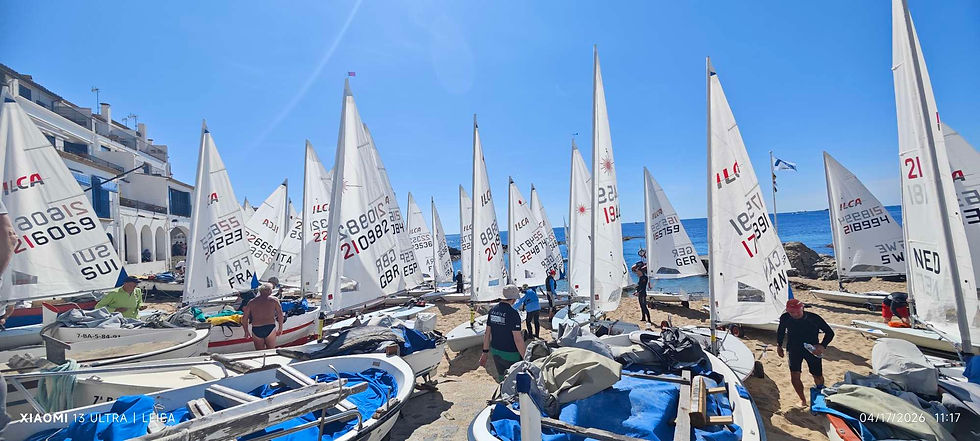
The Camí de Ronda coastal path threads along the entire Costa Brava from cove to cove. Sections near Calella de Palafrugell and Tamariu offer spectacular cliff-top walking with sea access at every bay. Sailing regattas — including ILCA/Laser class events — take place in Calella de Palafrugell.

Medieval Villages and Roman Ruins
Peratallada is one of the best-preserved medieval villages in Catalonia. Girona's walled Jewish quarter predates the Spanish Inquisition. Empúries contains the only site in Spain where Greek and Roman civilisations overlap.
Best Time to Visit Catalunya
The shoulder seasons are ideal — spring (April to June) and early autumn (September to October). Temperatures are warm but not oppressive (18–28°C), the sea is swimmable from May through October, and Barcelona's streets and Costa Brava coves are dramatically less crowded than in July and August.
April–June: blooming countryside, warm days, empty beaches, sailing season begins
July–August: peak heat (33°C+), crowded beaches and Barcelona streets, higher prices
September–October: golden light, harvest season, warm sea, quieter villages — our personal favourite
November–March: very few tourists; cold but manageable; Barcelona cultural season in full swing

Barcelona on Sant Jordi weekend
Hint! We visited in late April (Sant Jordi weekend — April 23rd) when Barcelona fills with roses and books. One of the most atmospheric days of the year.
Getting to Catalunya
Barcelona is one of Europe's best-connected cities with excellent air, rail and road links.
By Air
Barcelona El Prat Airport (BCN) — largest hub, dozens of international and intercontinental routes
Girona–Costa Brava Airport (GRO) — excellent for low-cost flights, 40 min from Girona city, 1h20 from Barcelona
Reus Airport (REU) — useful for south Catalonia and Tarragona
By Train
AVE high-speed rail connects Barcelona to Madrid (2h30), Valencia (3h), Paris (6h30 via TGV)
Rodalies and regional trains connect Barcelona to Girona (35 min by AVE, 1h20 regional), Sitges (35 min) and the coast
By Car
AP-7 motorway runs the full length of the Catalan coast — Barcelona to Girona and on to France
Renting a car is strongly recommended for the Costa Brava — essential for reaching smaller coves and villages
Parking in Barcelona city centre is expensive and mostly unnecessary — use the metro
Barcelona — The City That Never Bores You
Barcelona is extraordinary. It has the bones of a great Roman city, the elegance of 19th-century Eixample boulevards, the chaos of the Gothic Quarter's medieval lanes, and the surreal imagination of Antoni Gaudí stamped across it in stone and mosaic. Walk everywhere. Eat often. Stay close to the sea.
Staying Close to the Sea in the Centre
The best Barcelona base for first-time visitors is the area between the Gothic Quarter (Barri Gòtic) and the waterfront — El Born, La Barceloneta, and Sant Pere. You can walk to almost everything: the Rambla, the Picasso Museum, the beach, the Born market, and the old port. These neighborhoods feel genuinely lived-in, with neighbourhood bakeries, tapas bars open at noon, and almost no chain restaurants.
Our recommendation: stay in El Born or the Gothic Quarter. Avoid hotels near La Rambla if budget allows — the real Barcelona is one block away.
Walking Barcelona — The Best Route on Foot
Barcelona is made for walking. The distances between attractions are short, the streets are mostly flat (except Gràcia and Montjuïc), and the sidewalks are wide. Allow 3–4 hours for a full walking circuit of the old city.
The Classic Barcelona Half-Day Walk
Start at Barceloneta beach for morning coffee with sea views. Walk north along the Port Olímpic promenade to the Parc de la Ciutadella — Barcelona's central green lung, with a monumental waterfall fountain (partially designed by a young Gaudí). From the park, cross into El Born: browse the Passeig del Born and visit Santa Maria del Mar, the 14th-century Gothic masterpiece built by the people of the Ribera neighbourhood. Continue through the Gothic Quarter to the Plaça Reial and La Rambla, but walk quickly — La Rambla is for crossing, not lingering. Finish at the Boqueria market for lunch.
The Eixample Walk (Gaudí & Modernisme)
From Passeig de Gràcia metro, walk the so-called Manzana de la Discordia — one city block containing three of the finest modernista buildings in Barcelona: Casa Lleó Morera (Domènech i Montaner), Casa Amatller (Puig i Cadafalch), and Gaudí's Casa Batlló. Continue north to La Pedrera (Casa Milà), then either up to Sagrada Família (20-min walk) or take the L5 metro one stop. The Eixample's grid of blocks is pleasant to walk — wide pavements, ground-floor bars, and a very human scale.
Evening Walk: Barceloneta to El Born
Walk the seafront promenade at golden hour. The stretch from Port Olímpic to the old port (Port Vell) takes about 40 minutes at a relaxed pace. Stop for a beer or vermouth at one of the chiringuitos (beach bars) on Barceloneta. As the sun drops, cross into El Born and find a terrace for dinner. The Passeig del Born on a warm evening, with locals out for their passeig (stroll), is one of the great pleasures of Barcelona.
Main Attractions in Barcelona
1. Sagrada Família
Gaudí's masterpiece and the most visited monument in Spain. See dedicated section below.
2. Park Güell
Gaudí's hilltop park overlooking the city — mosaic terraces, stone viaducts, and famous dragon staircase. Book tickets in advance. Arrive early morning for the best light and fewest crowds.
3. Casa Batlló

One of the most theatrical buildings on earth — organic bone-white facade, dragon-scale roof, and an interior that flows like a deep-sea cave. Evening light shows are extraordinary but pricey.
4. La Pedrera (Casa Milà)
Gaudí's last civic building, with its famous undulating stone facade and warrior-like rooftop chimney sculptures. The Espai Gaudí exhibition is excellent.
5. Barri Gòtic (Gothic Quarter)
Walk the narrow medieval lanes between the Roman Temple of Augustus and the Cathedral. Plaça de Sant Jaume, Pont del Bisbe, and the hidden Plaça de Sant Felip Neri are all unmissable.
6. El Born Quarter
The most liveable neighbourhood in central Barcelona. Visit the Basílica de Santa Maria del Mar, the Born Cultural Centre (Roman ruins under a 19th-century iron market), and dozens of independent boutiques and tapas bars.
7. La Barceloneta Beach
The city beach — not the most pristine, but genuinely fun. Walk the boardwalk, swim, eat fresh seafood at a waterfront restaurant. Don't leave without trying grilled sardines.
8. Montjuïc Hill
Take the cable car or funicular up for panoramic city views. Explore the Fundació Joan Miró and the Museu Nacional d'Art de Catalunya (MNAC), housed in the palatial Palau Nacional.
9. La Boqueria Market
The iconic covered market on La Rambla. Best visited early morning before the tourist crowds. Buy jamón, olives, fresh fruit, and cheese to eat on a nearby bench.
10. Palau de la Música Catalana
Domènech i Montaner's UNESCO-listed concert hall — the interior is one of the most spectacular spaces in Europe, an explosion of coloured glass and floral sculpture. Book a guided tour or better still, attend a concert.
Gaudí & Sagrada Família — A World Apart
📷 Sagrada Família & The World of Gaudí: https://photos.app.goo.gl/gAPKt3yKgJJoYNJDA

Antoni Gaudí (1852–1926) is the architect who changed how human beings think about buildings. His work is not decorative — it is structural, mathematical, and deeply rooted in the forms of nature: parabolic arches, branching columns, catenary curves. He spent the last 15 years of his life working exclusively on the Sagrada Família, sleeping in the crypt, refusing all other commissions. He was hit by a tram in 1926, died without being identified for three days, and was buried in the crypt of his unfinished cathedral.

Antoni Gaudí: The Visionary Behind Sagrada Família
Early Life & Formation (1852–1883)

Antoni Plácid Guillem Gaudí i Cornet was born June 25, 1852, in Reus, a modest town 100 km southwest of Barcelona. His father was a coppersmith and boilermaker—a craftsman who worked with curves and form. This lineage shaped Gaudí's instinct for three-dimensional thinking; he later said he inherited his love of geometry from his father's trade.
Gaudí was a solitary, religiously devout child with poor health (chronic rheumatism plagued him throughout life). He studied in Barcelona and trained as an architect under Josep Fontanet, graduating in 1878. His early work was conventional Modernisme—but his mind was already orbiting something radical. By the early 1880s, Gaudí had begun to articulate a philosophy that would isolate him from peers: architecture must mimic nature, not impose geometry upon it.
While other architects sketched straight lines and right angles, Gaudí was asking: Why does nature avoid the straight line? Why do trees branch in curves? Why do shells spiral?

His Special Thinking: Nature as Master Teacher

Gaudí's genius lay in a fusion of three currents:
1. Structural Naturalism Gaudí rejected the Euclidean grid. He believed buildings should be "grown," not drawn. His designs were based on:
Catenary curves (the shape a hanging chain forms under gravity—mathematically elegant, structurally efficient)
Parabolic arches (distribute weight like tree trunks distribute sap)
Organic branching (pillars split and divide like roots or branches)
He famously used physical models—hanging chains weighted with lead shot—to test how forces flowed through a structure. If a hanging chain formed a catenary, inverting it revealed the optimal arch shape. This wasn't mysticism; it was applied physics disguised as poetry.
2. Catalan Regionalism & Faith Gaudí was a fervent Catalan nationalist in an era when Catalonia was suppressed under Spanish rule. Architecture became his vehicle for cultural resurrection. He believed Catalan identity was rooted in medieval Gothic—those soaring pointed arches, ribbed vaults, flying buttresses. But he wanted to evolve Gothic, not resurrect it. His structures would be neo-Gothic but alive, breathing, capable of exceeding medieval stone.
Gaudí was also devoutly Catholic. Not conventionally—he fasted, wore the same suit for years, spoke in aphorisms. He saw architecture as a form of prayer. "A building is not something you use; it's something you inhabit spiritually."
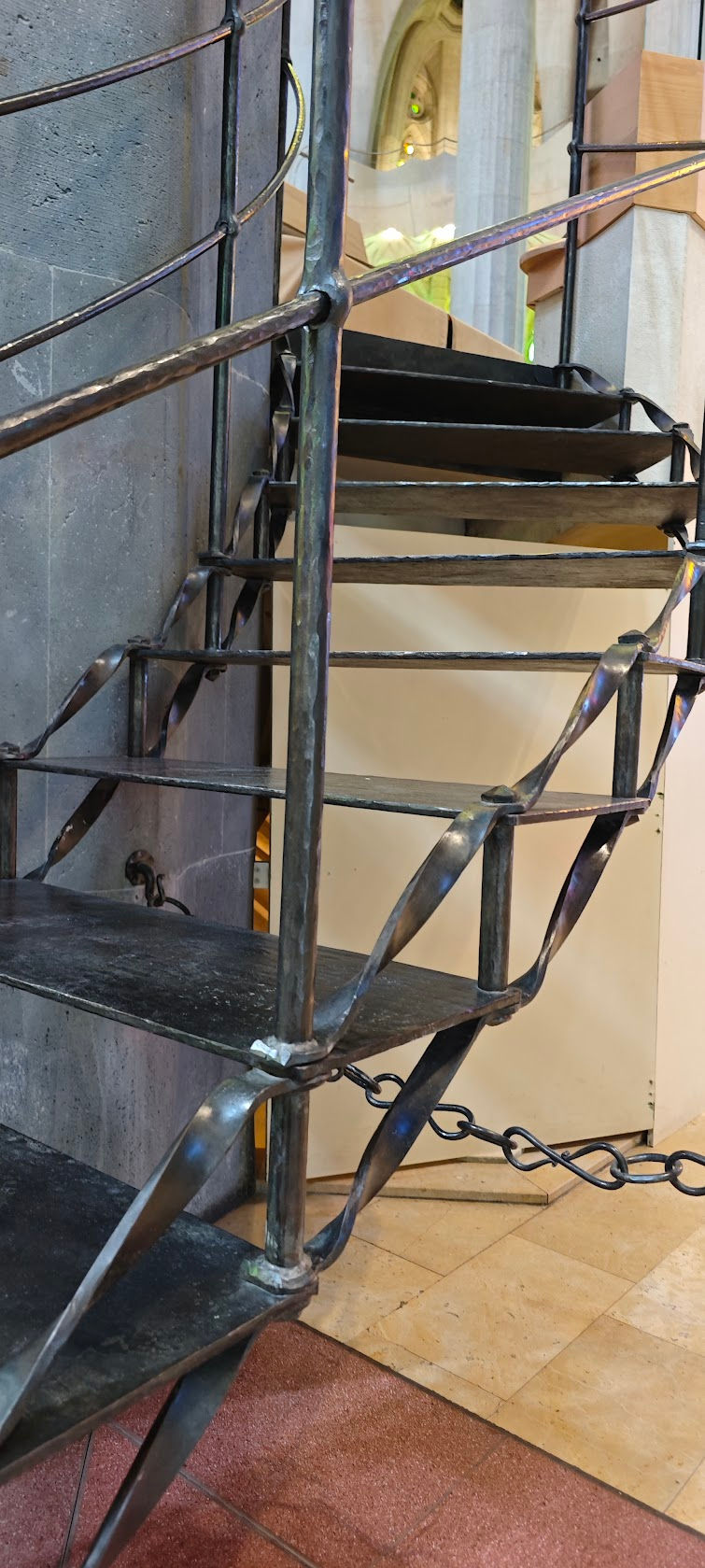
3. Total Synthesis Gaudí was obsessed with harmony between ornament, structure, and function. A balcony wasn't merely functional—its ironwork became sculpture. A ceiling wasn't flat—it undulated. Tiles didn't cover a surface—they sang with color and pattern (often using discarded tile scraps, trencadís, which he elevated to high art). Form and function were inseparable, spiritual and material merged.

The Sagrada Família: Entry & Transformation (1883–1926)

How He Entered the Project The Temple Expiatori de la Sagrada Família was begun in 1883 by Francisco de Paula del Villar, a traditionalist architect. Progress was slow; the project lacked vision and funds. In 1883, Gaudí—then 31 and already celebrated for his Casa Vicens—was brought in as a consultant to salvage it.

The existing crypt was conventional Gothic Revival. Gaudí studied it, walked the site, and made a radical decision: he would scrap the entire plan and reimagine the temple as a synthesis of all his ideas—nature, faith, structure, and Catalan identity fused into a single building.
By 1884, he had taken complete control. He would spend the last 16 years of his life (1910–1926) almost entirely on this one project, living in a workshop on-site, becoming a hermit-architect.
His Vision for Sagrada Família

Gaudí designed a temple with three facades:
Nativity Facade (east): Celebrating Christ's birth—organic, exuberant, teeming with naturalistic sculpture (plants, animals, human figures climbing toward heaven)
Passion Facade (west): Christ's suffering—stark, angular, skeletal, designed by sculptor Josep Maria Subirachs after Gaudí's death
Glory Facade (south, never completed in his lifetime): The final judgment—the grandest, meant to dwarf the others

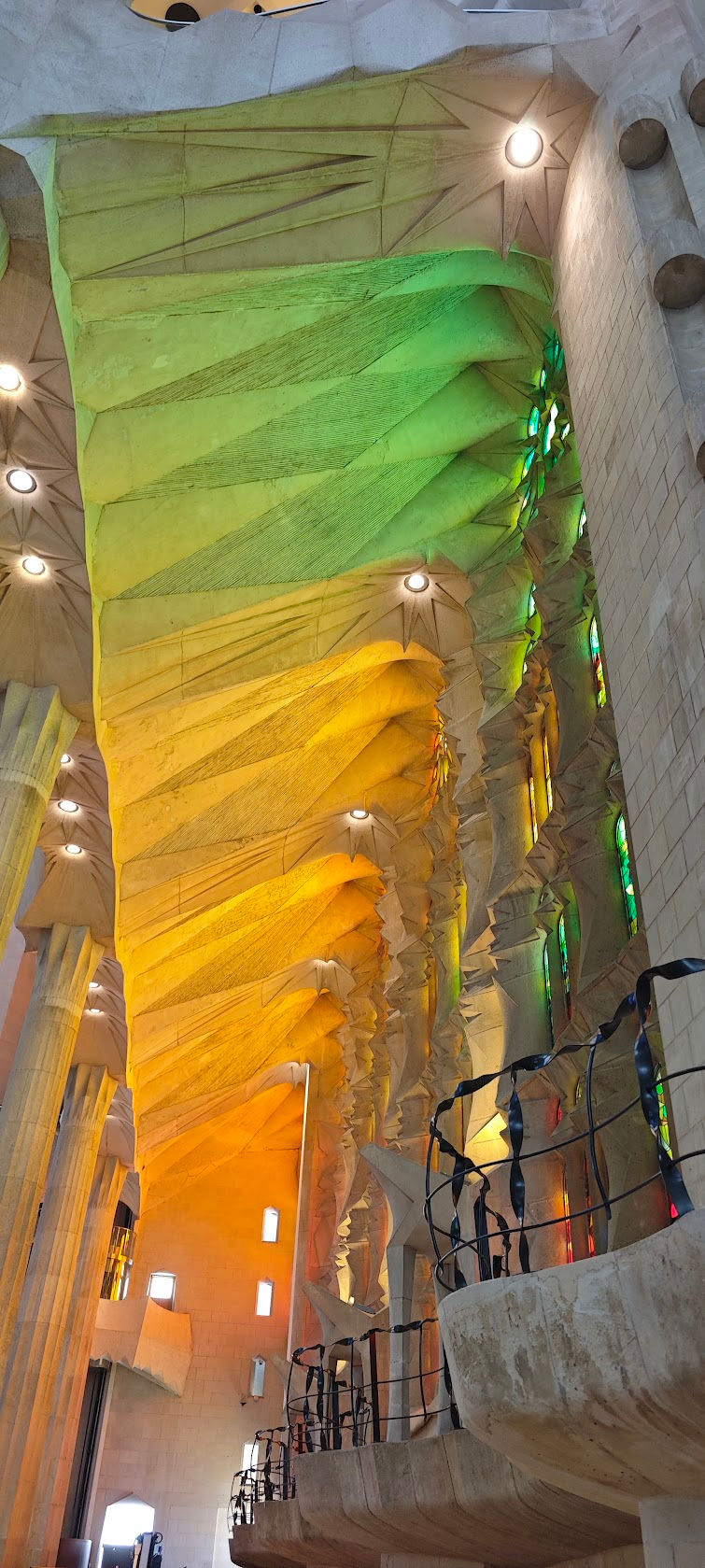
The interior was to be a forest of pillars—not rigid columns but tree-like structures that split and branch, their capitals designed to look like palm fronds. The vaults above would be hyperbolic paraboloids (saddle shapes found in nature). Light would filter through stained glass like sunlight through leaves.

Key Innovation: The Catenary Vault System Gaudí's structural breakthrough was his use of hanging chain models to design vaults. He would photograph these models, invert the images, and trace the shapes as blueprints for stone. This meant:
No buttresses needed (lateral forces resolved internally)
Walls could be thinner and more expressive
The building itself became a sermon in physics and beauty

His Material Philosophy Gaudí believed ornament must emerge from material, not be imposed on it. Stone should look like stone, tile like tile. He incorporated:
Local Montserrat stone (those jagged rocks he loved)
Ceramic tiles in brilliant blues, greens, golds
Iron worked by local blacksmiths into organic forms
Mosaic glass and broken tile (trencadís)—turning waste into transcendence

How He Lived: The Ascetic Visionary
By 1910, Gaudí had become a recluse. He:
Lived in a small room adjacent to the Sagrada Família workshop
Owned almost nothing; wore the same worn suit daily
Ate frugally (bread, vegetables, milk)
Walked through Barcelona's streets in tattered clothes, often mistaken for a vagrant
Had no romantic relationships; architecture was his obsession
Attended Mass daily, sometimes multiple times
Barely slept, sketching and calculating at night
Colleagues described him as brilliant but impossible—a perfectionist who would redesign a detail 50 times. He had no patience for contractors who cut corners. "Rush is the enemy of perfection," he'd say.
His younger colleagues (especially Domènec Sugrañes, who assisted him) reported that Gaudí spoke in paradoxes:
"Simplicity is the ultimate sophistication"
"The straight line belongs to men; the curved line belongs to God"
"Color is the keyboard, light is the harmonist"
He was also prescient: in 1910, he told visitors that the Sagrada Família would take 100+ years to complete—a timeline that proved accurate.
His Work Beyond Sagrada Família
Before Sagrada Família consumed him, Gaudí created masterpieces:
Casa Vicens (1883–1888) His first major work—a mansion for a tile merchant. The exterior blazes with ceramic tiles (blues, greens, yellows) in geometric patterns. Every surface sings. It announced his arrival as a visionary.
Park Güell (1900–1914) A failed real estate project (Eusebi Güell commissioned a housing development for Barcelona's elite). Gaudí transformed it into something stranger and more beautiful: a public park where nature and architecture breathe together. Mosaic-covered terraces, organic walls, a gatekeeper's lodge that looks like a fairytale cottage. Thirty families were supposed to live there; only two did. Today, it's Barcelona's most visited monument.
Casa Batló (1904–1906) The renovation we discussed earlier. Its undulating facade and organic interior redefined what a renovated building could be. The principal floor (noble floor) is a masterpiece of flowing space—no right angles, no harsh transitions.
La Pedrera/Casa Milà (1906–1910) An apartment building that looks like a quarried cliff face or rolling landscape. The roof is a sculpture garden of chimneys and ventilation shafts resembling armored warriors. Inside, the apartments have no load-bearing walls—pure spatial freedom achieved through Gaudí's structural innovations.
Crypt of the Colònia Güell (1898–1916) A small chapel for workers at Eusebi Güell's textile factory. Though modest in scale, it's where Gaudí first experimented with his hanging-chain models. A spiritual precursor to Sagrada Família.
His Death & Legacy (1926)

On June 7, 1926, Gaudí—frail, 73, dressed in rags—was struck by a tram near the Sagrada Família. Passersby, not recognizing him, left him in the street. He was eventually taken to a hospital for the poor. Three days later, he died of his injuries.
His funeral was a Catalan national event. Thousands lined the streets. He was buried in the crypt of the Sagrada Família—the building he had given his life to.
Unfinished Legacy At his death, the Sagrada Família was perhaps 20% complete. The Nativity Facade stood largely finished; the interior pillars were rising. Gaudí's collaborators (Domènec Sugrañes, Lluís Bonet i Gari) continued his work, but without his genius, the project became a reconstruction effort rather than creation.
Gaudí's documented designs existed, but much was intuitive—calculations in his head, models built on-site, decisions made in the moment. Rebuilding after the Spanish Civil War (1936–1939), when anarchists burned the workshop and destroyed many models, meant later architects had to interpret his vision, not simply execute it.
Today (2026), the Sagrada Família is still under construction—151 years after Gaudí began. The interior is largely finished; the Glory Facade and central tower (Jesus's spire) remain. Estimates suggest completion around 2028–2030, though Gaudí's exacting standards mean timelines slip.

What Made Him Unique
Gaudí was not a theorist who drew blueprints. He was a materialist mystic—someone who believed that:
Physics = Spirituality: Understanding how forces flow through a structure is understanding God's logic
Nature is the textbook: All beauty and efficiency is already written in trees, shells, rock formations—the architect's job is to read, not invent
Ornament must be structural; structure must be ornamental: There's no divide between decoration and function
Perfection requires obsession: Speed and commerce are the enemies of transcendence
He died poor, unknown to most of the world, having built perhaps 10 major works. Yet his influence shaped 20th-century architecture—from Wright to Zaha Hadid. Architects still ask: How did he know? How did an untrained perfectionist in 1880s Barcelona anticipate parametric design, biomimicry, and structural optimization?
The answer: Gaudí didn't learn nature from textbooks. He was nature. He built as trees grow.
The building is still being built. Completion is expected around 2026 — the centenary of Gaudí's death. If you are visiting before that, you are witnessing one of history's greatest construction stories still in progress.

Visiting the Sagrada Família
Book tickets weeks in advance — the site sells out consistently
Arrive at opening time (9:00am) to beat the crowds
The Nativity Facade (facing east) is Gaudí's original work — organic, sculptural, overwhelming
The Passion Facade (facing west) is Subirachs' post-Gaudí interpretation — starker, more geometric
Take the tower lift (extra cost) — views of Barcelona from 100m are extraordinary
Spend at least 90 minutes inside — the forest of branching columns and coloured light changes completely with the hour
The Gaudí museum in the crypt is included — don't skip it
The Complete Gaudí Map in Barcelona
• Sagrada Família — the masterwork (Carrer de la Marina)
• Park Güell — hilltop garden city (Carrer d'Olot, Gràcia)
• Casa Batlló — Passeig de Gràcia 43
• La Pedrera / Casa Milà — Passeig de Gràcia 92
• Palau Güell — just off La Rambla, his first major commission
• Casa Vicens — early Gaudí in Gràcia, recently opened to visitors
• Parc de la Ciutadella — the monumental fountain (young Gaudí collaboration)
Practical tip: Buy the Gaudí multi-site card if you plan to visit more than two paid sites — it saves significantly.
Casa Batlló: Gaudí's Aquatic Masterpiece

The Building Passeig de Gràcia 43, Barcelona. Gaudí's 1906 renovation of a 1875 apartment block—he gutted it and grafted a revolutionary new facade and interior onto the skeleton.

What Makes It Iconic
Undulating stone facade studded with colorful mosaics, resembling scales or waves
Balconies like twisted bone; windows like eye sockets
Roof topped with overlapping tiles shaped like a dragon's back (Casa del Drac)
Interior: Organic pillars branch like trees; ceilings curve; every surface curves
Biomorphic design: Everything mimics nature—no straight lines
Why It Matters It's Gaudí's principle that "the straight line belongs to men; the curved line belongs to God" made tangible. The building breathes; it doesn't impose geometry—it grows.
Visiting
Book online (avoid 1–2 hour queues; €30/adult)
Best times: 9 AM or 5+ PM
Duration: 1.5–2 hours
Highlights: Principal floor (noble apartment), roof (dragon tiles, city views), basement (original servants' quarters)
Photography: Excellent on roof and exterior; phone cameras only
The Short Version Gaudí took a tired apartment building and transformed it into a living, breathing organism. It's architecture as nature, not as geometry. Stand in front and you'll understand why Gaudí changed what buildings could be.
Barcelona's Essential Museums
Barcelona has one of Europe's richest museum landscapes. Below are the ones worth your time:
1. Museu Picasso


One of the world's finest Picasso collections, housed in five connected medieval palaces in El Born. The permanent collection traces Picasso's formative years in Barcelona with exceptional early works. Tuesdays are free from 3pm but crowded — arrive early on weekdays.
2. Fundació Joan Miró (Montjuïc)


A purpose-built Rationalist building by Josep Lluís Sert, set in gardens on Montjuïc. Miró's bold primary colours and playful surrealism are presented in perfect natural light. One of the most pleasurable museum experiences in Spain.
3. MNAC — Museu Nacional d'Art de Catalunya

The definitive collection of Catalan art, from Romanesque murals rescued from mountain churches (the finest collection anywhere in the world) through to modernisme and the 20th century.

The view from the terrace back over Barcelona and towards the sea is alone worth the walk up.
4. MACBA — Museu d'Art Contemporani de Barcelona
Richard Meier's gleaming white building in the Raval is a permanent anchor for Barcelona's contemporary art scene. The plaza outside doubles as the city's main skateboarding spot. Free on Mondays after 4pm.
5. Museu d'Història de Barcelona (MUHBA)
Enter through the Gothic Quarter and descend below ground into the preserved Roman city of Barcino — streets, fish-salting factories, and a 4th-century baptistery. One of the hidden wonders of Barcelona.
6. Cosmocaixa — Science Museum
Outstanding science museum in Sant Gervasi — particularly good for families and children. The Amazon rainforest reconstruction with live animals inside a glass pavilion is extraordinary.
7. Fundació Antoni Tàpies
The influential Catalan abstract artist's foundation in an ornate Eixample building. Small but consistently excellent.
Some Art Preservation method and details
New to us, we decided to included it here. Details about MNAC — Museu Nacional d'Art de Catalunya and Strappo Method - Removing Medieval Murals from Catalan Churches

What is Strappo? An aggressive technique for peeling frescoes directly from church walls. The painted plaster (2–5mm thick) is physically chiseled away from its stone backing and transferred to portable panels—transforming murals from architectural elements into museum objects.
How It Works
Facing: Protective paper/fabric glued to the painted surface
Undercutting: Chisels cut horizontally behind the plaster, isolating it from stone
Extraction: Pry bars wrench the plaster slab away (violent, irreversible)
Transfer: Mounted on wooden panel; protective layer removed
Result: Portable artwork, no longer bound to its church
Catalonia's Campaign (1920s–1950s) The Museu Nacional d'Art de Catalunya (MNAC) removed 30+ Romanesque murals from rural Pyrenean churches to preserve them from decay. Major sources:
Sant Climent de Taüll: 12th-century Christ Pantocrator + apse decoration (largest removal)
Santa Maria de Taüll: Narrative frescoes
Other Vall de Boí churches
Why Remove?
Rural churches deteriorating (no maintenance budgets)
Medieval frescoes painted over during renovations
Risk of theft/vandalism
Catalan cultural awakening demanded preservation of patrimony
The Controversy
Structural damage: Frescoes are semi-structural; removal weakened church walls
Loss of meaning: Murals meant to tower above altars in candlelight became flat museum objects
Irreversibility: Once removed, murals can never be returned
Deterioration: Murals often decay faster in museums (temperature fluctuations, light exposure)
Colonization: Rural communities lost cultural heritage to Barcelona elites
Technical Risks
Brittle 800-year-old pigments crack under vibration
Uneven medieval plaster separates unpredictably
Moisture weakens bonds
Large murals require coordinated teams
One mistake destroys the entire work
Sant Climent Example The Christ Pantocrator (8+ meters tall) filled the apse vault, illuminated by candlelight during Mass—a teaching tool for illiterate congregants. Removed and mounted flat on a museum wall, it survives but loses its spiritual and architectural context.
Modern Shift Today, strappo is a last resort. Conservators prefer:
In situ stabilization: Protect murals where they stand
Documentation: High-res photography, 3D scanning
Selective removal: Only if structurally beyond repair
Reversible methods: Modern adhesives that don't damage
The Paradox MNAC's collection is world-class and climate-controlled. But the churches are now shells—bare stone where paint once was. The artworks survived; the experience died.
MNAC Today 30+ detached Romanesque murals in dedicated galleries. 12th–13th century, predominantly from Catalonia's Pyrenees. Beautifully preserved, but orphaned from their original sacred spaces.
Eating in Barcelona — Tapas, Markets, and Small Plates

The best food in Barcelona is eaten standing up, at noon, in places with no menu in English and handwritten chalkboard specials. The Catalan approach to eating is generous and unpretentious — good olive oil, fresh local produce, and dishes that have not changed in 50 years.

Essential Things to Eat
1. Pan amb tomàquet
Bread rubbed with fresh tomato and drizzled with olive oil. The Catalan equivalent of Italian bruschetta and the foundation of every meal. Served free in most restaurants with your order.
2. Patatas bravas
Fried potato chunks with spicy tomato sauce and aioli. Everywhere in Barcelona, but the best are still crisp on the outside and soft inside. Order these first.
3. Croquetes de pernil
Ham croquettes — perfectly creamy inside, crisp outside. A benchmark of any tapas bar.
4. Pimientos de Padrón
Small green peppers blistered in olive oil and salted. Most are mild, one in ten will burn your mouth. This is part of the experience.
5. Fideuà
Catalan coastal cousin of paella — made with short noodles instead of rice, cooked with seafood in a shallow pan. Often better than paella.
6. Canalons
Barcelona's Catalan cannelloni — stuffed with meat, baked in béchamel. Traditional in local restaurants, not the Italian version.
7. Crema catalana
The original crème brûlée — thinner custard, harder caramel crust. Better than the French version. Order it everywhere.
8. Bombas de la barceloneta
Fried meatball-potato balls invented in Barceloneta, served with two sauces. The neighbourhood specialty — only available close to the beach.
9. Fresh grilled seafood
Dorada (sea bream), rape (monkfish), langostinos (king prawns). Order at any waterfront restaurant in Barceloneta — it arrives at the table grilled simply with lemon and olive oil.
10. Cava
Catalonia's sparkling wine from the Penedès region, made by the same method as Champagne. Order it by the glass everywhere — a copa de cava with morning patatas bravas is perfectly acceptable.
Where to Eat — Barcelona Recommendations
• El Xampanyet (El Born) — legendary cava bar on Carrer de Montcada, perfect old-school tapas
• Bar del Pla (El Born) — small neighbourhood bar, excellent croquetes, good wine list
• La Cova Fumada (Barceloneta) — cash only, no sign on the door, the original bombas — arrive before noon when they open
• Tickets (Eixample) — Albert Adrià's informal tapas restaurant; book 2 months ahead or queue from 7pm
• Mercat de Santa Caterina (Sant Pere) — daily market, better than Boqueria for locals, wave-shaped coloured mosaic roof
• Any stand-up bar in El Raval at noon — vermouth, olives, anchovies, and the complete Barcelona experience
Budget tip: Eat the menú del día (set lunch menu) at any local restaurant: 3 courses, bread, wine, and coffee for €12–16. The best value meal in Barcelona.
Montserrat — The Mountain Monastery
📷 Montserrat — Monastery & Mountains: https://photos.app.goo.gl/kAyFDyFxhqhy4dYh7

Rising from the flat Catalan plain like the serrated blade of a saw — the name means 'serrated mountain' in Catalan — Montserrat is one of the most dramatic landscapes in Spain. At 1,236m, the mountain is topped with a Benedictine monastery that has been a place of pilgrimage since the 12th century, housing the Black Madonna (La Moreneta), the patron saint of Catalonia.

The mountain is 60km northwest of Barcelona. Reach it by FGC train from Plaça Espanya to Monistrol de Montserrat, then the rack railway (cremallera) up to the monastery. The round trip takes a full day — go early and stay until the light changes in the afternoon.
What to Do at Montserrat
1. Visit the Monastery Basilica

The 16th-century church is the heart of Montserrat. Arrive for the noon concert by the Escolania de Montserrat — one of the oldest boys' choirs in Europe (since 1307), singing daily at 1pm. The acoustic in the basilica is extraordinary.
2. See La Moreneta
The Black Madonna statue is in a side chapel above the main altar — accessible via a separate entrance queue. A moving and ancient site regardless of whether you are religious.
3. Sant Joan Trail
Take the funicular up to Sant Joan hermitage and walk the 20-minute path to the Sant Joan cross at the top of the ridge. The view over the whole plain, to the sea in one direction and the Pyrenees in the other, is extraordinary.
4. Sant Miquel Cross Walk
A shorter 20-minute walk from the monastery to the Sant Miquel cross and viewpoint — ideal if you are not up for a full hike. Magnificent rock formations at close range.
5. Museum de Montserrat
Surprising collection of Catalan art, Egyptian antiquities, and 20th-century works including Monet, Picasso, and Dalí. Often overlooked by day-trippers.

Practical tip: Buy the Tot Montserrat combined ticket (FGC train + rack railway + funiculars) in Barcelona. It covers everything and works out considerably cheaper.
The Black Madonna of Montserrat (La Moreneta)

The Black Madonna — known in Catalan as La Moreneta ("the little dark one") — is one of the most venerated religious icons in Catalonia and all of Spain. She sits enthroned in the Basilica of Montserrat, and her story weaves together legend, history, and deep national identity.
The legend of the discovery
According to tradition, in 880 AD, a group of shepherd children near Montserrat saw a dazzling light descending from the sky, accompanied by celestial music. Night after night they returned, witnessing the same vision. Word reached the Bishop of Manresa, who climbed the mountain with a procession. When they found the statue hidden in a cave (now called the Santa Cova — Holy Cave), they attempted to carry it down to Manresa, but the statue miraculously became too heavy to move. This was interpreted as a divine sign: the Madonna wished to stay on the mountain. A chapel was built on the spot, the origin of what would eventually become the great monastery.
The statue itself
The current statue dates from the late 12th century, carved in Romanesque style — so the "miraculous discovery" story is largely pious legend layered over a more mundane history. She is made of dark polychrome wood, about 95 cm tall, and depicts Mary seated on a throne with the infant Jesus on her lap. Both figures face forward with great solemnity, typical of Romanesque Marian iconography.
Why is she black?
This is the most debated question. Several explanations exist: the most scientific is simply centuries of oxidation and smoke from thousands of candles and incense burning in an enclosed space, which darkened the original lighter-toned wood. Another theory is that she was deliberately painted dark, possibly influenced by the Song of Songs line "I am black but beautiful" (Nigra sum sed formosa), which medieval theologians applied to the Virgin Mary. A more romantic explanation is that her complexion reflects her association with the earth and the ancient rocks of Montserrat itself.
Her role in Catalan identity
La Moreneta is far more than a religious relic — she is essentially the patron saint of Catalonia, declared so officially in 1881 by Pope Leo XIII. For Catalans, she became a powerful symbol of cultural and national identity, especially during periods of suppression. During the Franco dictatorship, when the Catalan language was banned in public life, Montserrat Monastery became one of the few places where Catalan could be freely spoken and celebrated — the monks actively protected the language and culture. The Madonna thus carries a dual meaning: spiritual mother and national protector.
The pilgrimage tradition
Visiting La Moreneta and touching or kissing her right hand (exposed through a glass orb) is one of the most important pilgrimage acts in the Iberian Peninsula. Countless Catalan couples visit her before their wedding, and it is an enduring tradition to name daughters Montserrat (or Montse) in her honor — you'll still meet many Montses across Catalonia today.
The boys choir, the Escolania — one of the oldest music schools in Europe, dating to the 13th century — sings daily in her honor, which gives the visit an almost otherworldly atmosphere that even non-religious visitors tend to find deeply moving.
Girona — Barcelona's Brilliant Smaller Sister
📷 Girona — The City on the River: https://photos.app.goo.gl/aJg1jvW3fFMD9S3h9
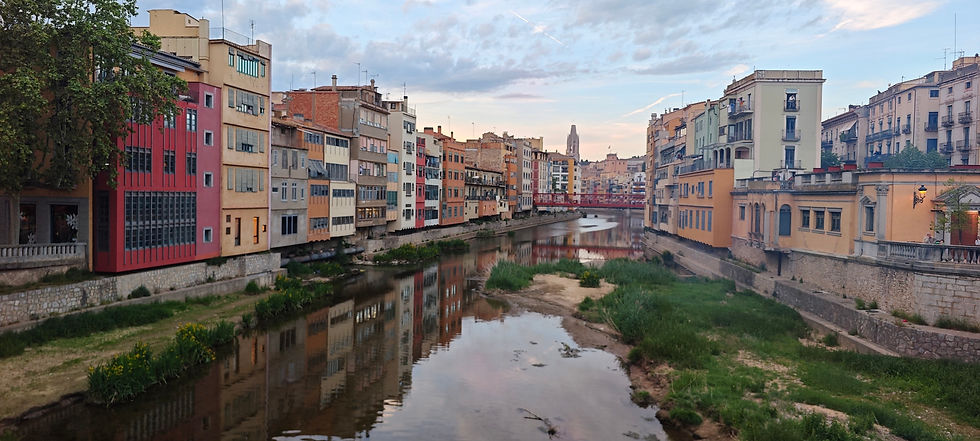
Girona was our best surprise of the entire trip. We arrived expecting a pleasant small city and found something closer to a miniature Barcelona — with a Jewish quarter older than anything in Barcelona, a medieval walled old town, a magnificent cathedral, and the Eiffel bridge. But with a fraction of the people. The vibe was completely relaxed, the cafés were full of locals, and the street musicians were excellent.
Girona is 37km from the Costa Brava coast and 100km north of Barcelona. It makes an ideal full-day stop between Barcelona and the Costa Brava, or a base for exploring the region. The AVE train from Barcelona takes 35 minutes.
Crossing the Eiffel Bridge — and All the Others
The Pont de les Peixateries Velles — known universally as the Eiffel Bridge because it was designed by Gustave Eiffel's company in 1877, made from iron trusses — is the most photographed point in Girona. But the real pleasure is crossing all the bridges over the Riu Onyar one by one: the Eiffel Bridge, the Pont de Pedra, and the Pont de Sant Agustí. From the bridges you get the famous view of the Case de l'Onyar — the coloured houses that hang above the water like a Catalan version of Florence.
Cross them all in both directions. Sit on a terrace on the far bank with a coffee and look back at the city. This view — medieval towers, pastel-coloured houses, church spires reflected in the river — is one of the most beautiful urban panoramas in Spain.
Top Places to Visit in Girona
1. Barri Vell (Old Town) and City Walls
The medieval city walls of Girona are intact and walkable — 3km of ramparts offering views over the old town and the plain beyond. Begin at the Portal de Sobreportes and walk the full circuit. The experience is free and extraordinary.
2. Catedral de Girona
At the top of 90 steep stairs, the Cathedral of Girona is famous for its single enormous Gothic nave — the widest Gothic nave in the world (23m). Inside, find the Tapestry of Creation, an 11th-century Romanesque embroidery of unusual completeness and beauty.
3. El Call — the Jewish Quarter
One of the best-preserved medieval Jewish quarters in Europe, dating from the 9th century. The narrow lanes of El Call are genuinely ancient — stone corridors, carved doorways, silent courtyards. Visit the Bonastruc ça Porta Centre (museum of Jewish history in Girona) for context.
4. Museu d'Art de Girona
Excellent collection of Catalan Romanesque art and medieval sculpture, housed in the Episcopal Palace adjacent to the cathedral. Often overlooked by visitors, it is outstanding.
5. Pont de les Peixateries Velles (Eiffel Bridge)
The iconic iron bridge over the Onyar — Eiffel workshop design, 1877. Best photographed from the Pont de Sant Agustí or from the east bank of the river.
6. Rambla de la Llibertat
Girona's elegant main street runs along the east bank of the Onyar — arcaded, full of café terraces, bookshops, and flower stalls. Perfect for a morning coffee or afternoon vermouth.
7. Banys Àrabs (Arab Baths)
A 12th-century bathhouse built in the Romanesque style (despite the name). Small, well-preserved, and a fascinating glimpse of medieval daily life.
8. Mercat del Lleó
Girona's covered market — fresh local produce, Catalan charcuterie, excellent cheeses. Far less touristy than Barcelona's Boqueria. Have lunch at one of the market bars.
Street Life: Musicians, Art Stores, and Terraces
Girona has an unusually strong street music culture — on any afternoon in the old town you'll hear classical musicians, jazz ensembles, or folk performers in the squares and along the river. The streets around El Call are lined with independent art galleries, craft stores, and bookshops. Sit on a terrace on the Rambla de la Llibertat for as long as you like — nobody will rush you.
Our impression: for those who find Barcelona slightly overwhelming, Girona gives you everything that makes Catalan urban life great — at half the intensity and a fraction of the cost. A beautiful, liveable, surprising city.
Costa Brava — Wild Cliffs and Crystal Water
The Costa Brava (Brave Coast) stretches 200km from the French border to Blanes, north of Barcelona. This is the dramatic, jagged coastline that put Catalonia on the European tourist map in the 1950s — but the northern sections, between Palamós and Cadaqués, remain genuinely unspoiled, with water clarity that rivals the Greek islands and walking paths that cross headlands and dive into hidden coves.

The water quality on the Costa Brava is exceptional by any European standard — protected from river runoff by the cliff geology, clear to 10m depth in many coves, and free of jellyfish for most of the season. The Camí de Ronda coastal path threads the entire coastline.
Costa Brava at a Glance
Best coves: Tamariu, Calella de Palafrugell, Llafranc, Sa Tuna, Aiguablava, Cap de Creus
Best walking: Camí de Ronda between Calella and Llafranc (45 min), Cadaqués to Cap de Creus (3h)
Best sailing: Calella de Palafrugell, Palamós, Sant Feliu de Guíxols
Drive: Self-driving essential — roads are narrow but well paved; park at village entrances in summer
Calella de Palafrugell — The Perfect Costa Brava Village
📷 Calella de Palafrugell — Costa Brava: https://photos.app.goo.gl/VtnikpKdob4tWYvq9

Calella de Palafrugell is our favourite place on the entire Costa Brava. It is a small white fishing village built around a series of connected rocky coves — each one with its own small beach of golden sand, crystal-clear water, and a bar or two. The village has not been heavily developed: the streets are narrow, the houses are whitewashed with blue shutters, and the boats are still pulled up onto the beach alongside the sunbathers.
The Habaneres festival every first Saturday of July — sea shanties sung by fishermen's choirs on the beach, accompanied by cremat (rum flambéed with coffee and cinnamon) — is one of the most atmospheric evenings anywhere on the Mediterranean.

Sailing at Calella de Palafrugell
The bay at Calella is one of the most popular sailing venues on the Costa Brava. ILCA/Laser class dinghy regattas are held regularly through the sailing season (April–October), and the protected anchorage off Cap Roig makes it excellent for keelboats. Sailing clubs operate from the cove — day charters and courses are available. The panorama from the water, looking back at the white village against the pine-covered headlands, is exceptional.
Walking the Camí de Ronda from Calella
The most rewarding coastal walk on the entire Costa Brava runs from Calella de Palafrugell north through the Jardins de Cap Roig to the neighbouring cove-village of Llafranc. The 45-minute cliff path offers continuous views of the bays below, passes the extraordinary botanical gardens of Cap Roig (open to visitors), and ends at the lighthouse above Llafranc — a spectacular elevated viewpoint. Walk back along the sea-level path through the coves for variety.
• Calella to Llafranc via cliff path: 45 minutes, easy to moderate
• Cap Roig Botanical Garden: world-class plant collections, summer concert series
• Continue from Llafranc to Tamariu: 1h15, more challenging, wilder landscape
What to See in and Around Calella
1. Coves of Calella
The village wraps around four connected coves — Port Pelegrí, Canadell, Malaspina, and La Platgeta. Each has a different character. Wander between them on the coastal path at water level.
2. Cap Roig Botanical Garden
25 hectares of gardens on a rocky headland above Calella, with views extending to the Pyrenees on clear days. One of the finest botanical gardens in Spain. The summer music festival (July–August) attracts major international artists.
3. Llafranc Lighthouse Walk
From Llafranc, 20 minutes up to the Sant Sebastià lighthouse — the highest point on the coast between the Pyrenees and Barcelona, with a 360-degree panorama.
4. Fishing Boats on the Beach
Calella still has working fishermen who pull their boats up onto the beach at Canadell. Early morning, between 6 and 8am, you can watch the catch come in. The fish is sold directly from the boats.
Practical tip: In July and August park at the edge of Palafrugell town and take the shuttle bus down to Calella — the narrow road to the village clogs completely and parking is impossible.
Tamariu — The Quietest Cove on the Coast
Tamariu is the most intimate of the Costa Brava's main villages — a single sheltered cove with fine golden sand, a handful of restaurants, and almost no commercial development. The water is exceptional. The village is quiet even in summer, because there is very little to do here except swim, eat seafood, and read in the shade of a pine tree. This is considered a feature, not a flaw.
Tamariu is 5km north of Calella de Palafrugell along the coast road. Combine the two in a single day: drive to Tamariu in the morning for swimming, walk the Camí de Ronda south to Calella for lunch, return by road.
Water quality: consistently rated among the best on the entire Catalan coast
Snorkelling: excellent rocky reef at the south end of the cove
Walking north: the Camí de Ronda continues through wilder, emptier headlands towards Aiguablava
Restaurants: simple fish and seafood menus, eaten at tables on the beach
Best kept secret: arrive at Tamariu at 8am when the beach is empty and the light on the water is extraordinary. Have coffee at the one bar that opens early. Walk the rocks in both directions before the families arrive.
Peratallada — A Medieval Village Carved from Stone
📷 Peratallada Medieval Village: https://photos.app.goo.gl/cz4dTZEZReEQT6wJA

The name Peratallada means 'carved stone' in Catalan — and the village delivers exactly that. Every building, every street, every archway and castle wall in this extraordinary medieval village is made from the same warm golden limestone, as if the whole place was excavated rather than built. It is one of the best-preserved medieval villages in Catalonia, and one of the most atmospheric in all of Spain.

Peratallada sits in the Baix Empordà plain, 20km from the coast, surrounded by flat agricultural land and ancient olive trees. It receives visitors but has not been overwhelmed by them — restaurants are serious, shops are local, and on weekday mornings you can have the castle courtyards almost to yourself.

What to See in Peratallada
1. Castell de Peratallada
The 10th-century castle is partially open to visitors. Walk the ramparts for views over the village and the surrounding plain — the surrounding moat (now dry) is still intact and dramatically atmospheric.
2. Plaça de l'Era
The main square of the village — surrounded entirely by medieval stone buildings, with a loggia, an arcaded walkway, and several excellent restaurants. The perfect place to eat lunch on a summer afternoon.
3. Medieval Lanes
Walk the complete circuit of the village walls and explore every lane — the village is small enough that you will find all of it in 45 minutes. Look for the carved doorways, the old olive press, and the medieval grain storage vaults.

4. Restaurant Dining
Peratallada has a higher density of excellent restaurants than any village of its size in Catalonia. Book ahead for weekends. The cuisine is Catalan country cooking — black rice, rabbit with romesco, local wine from Empordà.
Combine with: Ullastret (5km, Iberian ruins and medieval village), Pals (7km, another excellent walled village with sea views), and the rice paddies of the Baix Ter delta.
Sitges — The Jewel of the Costa Garraf
📷 Sitges — Jewel of the Costa Garraf: https://photos.app.goo.gl/QAabPEqo69yRQ2oP9
Sitges is 35 minutes south of Barcelona by train — and in every other sense a world apart. This sun-drenched white town on the Costa Garraf has been attracting artists, free spirits, and people seeking beautiful light since the late 19th century, when the painter Santiago Rusiñol established it as the bohemian capital of Catalonia. Today it is celebrated for its beaches, its Carnival (the wildest in Spain), its modernista architecture, and the extraordinary quality of its light.
The old town of Sitges sits on a promontory between two beaches, dominated by the Baroque church of Sant Bartomeu i Santa Tecla. The promenade below the church wall — La Ribera — is one of the finest seafront walks in Catalonia.
Top Places to Visit in Sitges
1. The Seafront and La Ribera Promenade
The path along the seafront below the church of Sant Bartomeu, with the sea on one side and the church garden on the other. Best at sunset, when the light turns the church walls golden and the sea goes flat and silver.
2. Platja de la Ribera and Platja de l'Àtica
The two main beaches on either side of the old town — calm, well-organised, and with excellent water quality. The beach at La Ribera is directly below the church; l'Àtica stretches south.
3. Museu Cau Ferrat
Rusiñol's extraordinary modernista house-museum on the seafront — stuffed with his personal art collection: El Greco paintings, medieval ironwork, Picasso drawings, Catalan ceramics. Deeply eccentric and unmissable. Recently fully restored.
4. Museu Maricel
Adjacent to Cau Ferrat, housed in a spectacular Gothic and Baroque complex overlooking the sea. Catalan art from the medieval period through to the 20th century — outstanding Romanesque sculptures and Noucentisme painting.
5. Old Town (Casc Antic)
Walk the narrow white lanes of the old town between the church and the port. The streets are lined with flowering plants, small restaurants, and bars — the atmosphere in the evening is particularly beautiful.
6. Plaça dels Quatre Cantons and Els Quatre Cantons Square
The heart of the old town's evening life — terraces, street musicians, local families. Have vermouth here before dinner.
7. Carnival (Carnaval)
Sitges Carnival (February/March) is the biggest and most theatrical in Spain outside Cádiz — five days of parades, costumes of extraordinary elaborateness, and an atmosphere that is genuinely uninhibited. Book accommodation 6 months in advance if visiting.
8. Mercat Municipal
The covered market in the new town — excellent local produce, cheeses, and charcuterie. Visit Saturday morning for the full experience.
Getting to Sitges
Train from Barcelona Passeig de Gràcia or Sants: 35–45 minutes, frequent service (Rodalies line R2 Sud)
Car from Barcelona: 45 minutes via C-32 coastal motorway (tolls apply)
Day trip or overnight: works perfectly as a day trip from Barcelona; staying overnight gives you the town after the day visitors leave — highly recommended
Best meal in Sitges: fresh seafood at any of the small restaurants along Carrer Major or the beach promenade. Order arrós negre (black rice with cuttlefish), a cold glass of Penedès white, and watch the sea.
Special Accommodation in Catalunya
Accommodation in Catalonia ranges from urban boutique hotels in Barcelona's Gothic Quarter to rural masias (traditional farmhouses) in the Empordà countryside and small seafront pensions in Costa Brava villages. Here are our recommendations:
In Barcelona — Stay in El Born or the Gothic Quarter
The best Barcelona experience comes from staying in the old city, within walking distance of everything. El Born has the best combination of neighbourhood restaurants, easy access to the waterfront, and proximity to major sights. The Gothic Quarter is more central but noisier on weekend nights.
• Look for: small boutique hotels in converted medieval buildings, apartments with private terraces
• Avoid: chain hotels near La Rambla — overpriced and in the city's most pickpocket-heavy zone
• Neighbourhood choice: El Born (best for eating and nightlife), Eixample (best for design hotels and Gaudí access), Gràcia (best for local neighbourhood atmosphere)
On the Costa Brava — Village Houses and Masias
The most atmospheric Costa Brava accommodation is in village houses in Calella de Palafrugell, Tamariu, or Llafranc — small, simple, with terraces overlooking the coves. Traditional Catalan masies (farmhouses) in the Empordà countryside offer a quieter alternative with pool and garden.
Calella de Palafrugell: book 3–4 months ahead for July and August — the village is small and fills completely
Tamariu: even smaller; very limited accommodation, very high demand in summer
Inland masia alternative: peaceful, cooler at night, 20–30 min drive to the coast
In Sitges — The Seafront and the Old Town
Sitges has an excellent range of hotels and pensions in the old town and along the seafront. Staying on or near the beach promenade gives you the town's best views and easiest access to both beaches.
Best: small hotels in the old town within 5 minutes' walk of the church and both beaches
For Carnival: book 6+ months in advance and accept premium pricing
Catalan Food Glossary
A quick reference for menus in Catalonia — Catalan differs significantly from Castilian Spanish:
• Pa amb tomàquet — Bread with tomato and olive oil (the essential Catalan starter)
• Arròs negre — Black rice with cuttlefish and aioli
• Fideuà — Short noodle paella variant with seafood
• Escudella — Traditional Catalan broth with meat and pasta, Christmas staple
• Botifarra — Catalan pork sausage, grilled and served with white beans (mongetes)
• Espinacs a la catalana — Spinach sautéed with pine nuts and raisins
• Mel i mató — Fresh cheese with honey — the simplest and best Catalan dessert
• Crema catalana — Custard with caramelised sugar crust (the original)
• Cava — Catalan sparkling wine (Penedès region, same method as Champagne)
• Vi negre / Vi blanc / Vi rosat — Red / white / rosé wine
• Vermut — Vermouth, drunk before lunch at any neighbourhood bar with olives
• Aiguardent — Catalan grape spirit, sometimes served with coffee (carajillo)
Suggested 10-Day Itinerary of Catalunyia
Below is our recommended 10-day circuit, combining city, coast, mountains, and medieval villages. All driving times are approximate.
1. Days 1–3: Barcelona
Arrive, settle in El Born. Day 1: waterfront and Gothic Quarter walk, Santa Maria del Mar, Boqueria. Day 2: Sagrada Família (morning) + Eixample Gaudí buildings (afternoon). Day 3: Park Güell (early morning) + Museu Picasso + El Born evening tapas.
2. Day 4: Montserrat
Full day excursion from Barcelona by FGC train. Morning monastery, noon choir, afternoon hiking to Sant Joan cross. Back to Barcelona for dinner.
3. Day 5: Barcelona to Sitges
Morning in Barcelona, afternoon drive or train to Sitges. Seafront walk, Cau Ferrat museum, dinner in the old town.
4. Day 6: Sitges to Girona
Morning at Sitges beach, midday drive north (1h45 via AP-7). Afternoon in Girona: city walls, El Call, Eiffel Bridge, terrace dinner on the Rambla.
5. Days 7–8: Costa Brava — Calella and Tamariu
Base yourself in Calella de Palafrugell or Llafranc. Day 7: coastal walking from Calella to Llafranc via Cap Roig. Day 8: drive to Tamariu for morning swimming, afternoon Camí de Ronda walk north.
6. Day 9: Peratallada and Empordà
Morning drive inland to Peratallada (30 min from coast). Walk the medieval village, lunch in the square. Afternoon: visit Pals or Ullastret. Return to Costa Brava for final evening.
7. Day 10: Return to Barcelona
Leisurely morning on the coast. Drive back to Barcelona (1h30 via AP-7), airport departure or final city evening.
A Final Word
Catalunya rewards the unhurried traveller. The best moments here are not scheduled: the morning light on the water at Tamariu before anyone else is on the beach, the street musician in a Girona alley who turns out to be extraordinary, the old man on the terrace in Peratallada who has been eating lunch at the same table for forty years and recommends the house wine with absolute confidence. Slow down. Stay longer than you planned. Eat standing up.
Cross every bridge twice!
4B Travel Guide
Catalunya, Costa Brava & Barcelona Edition


Comments